Crawl space waterproofing in Cookeville runs $2,500–$7,000 for collection and sump systems. Sixty-inch rain years over cave-country limestone mean water arrives from below as often as beside: springs and wet-weather seeps that follow the rock, not the site plan.
Reading karst water, the system that answers it, and the cheap fixes worth checking first.
Where Upper Cumberland water actually comes from
Some of it is ordinary: plateau-edge storms sheeting off saturated ground toward the foundation. The rest is karst's specialty: rain that vanished into the limestone a quarter mile away resurfacing as a seep at your footing, wet-weather springs that run for a week after every big system, ground that stays charged long after the gutters have gone quiet. The inspection walks the lot and reads where water emerges, because in cave country the design has to meet the water where the rock delivers it.
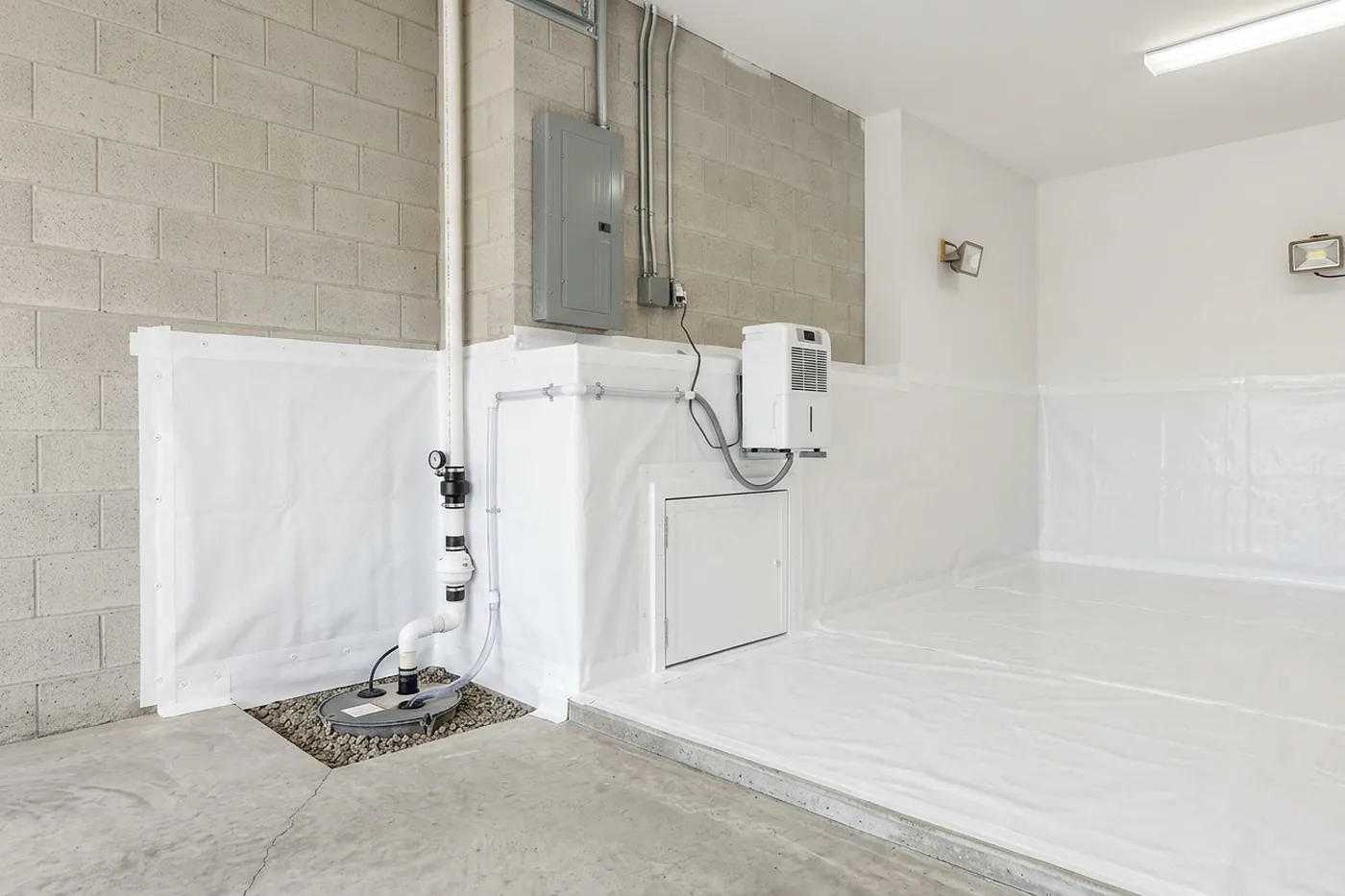
The karst-country system
- Cheap causes first: downspout extensions and grading corrections should lead the quote when they'll carry weight
- Collection at emergence points: seeps and springs intercepted where they surface
- Perimeter channels at the footing line where ground pressure pushes water through
- Sloped runs to a sealed basin at the crawl's true low point
- A rated pump with check valve where gravity can't finish the job
- Discharge that stays gone: routed clear of the limestone's return paths
Then the sealing conversation
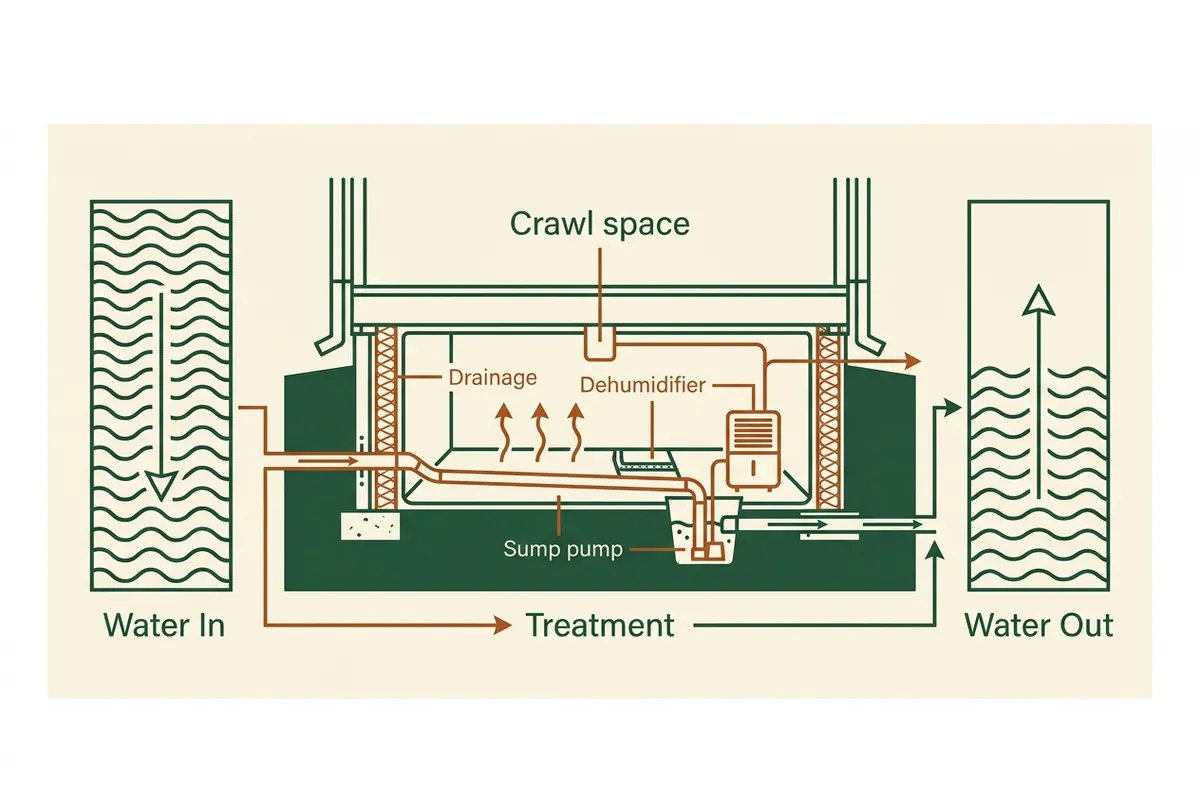
Dry-bottomed is the prerequisite, not the finish line: summer air still condenses in a vented crawl with perfect drainage. Once water management holds, the sealed system completes the job, and combined quotes share mobilization and cost less than staged years apart. Homes that only need drainage get only drainage: readings decide, not scripts.
Where is the water getting in?
Karst country changes this question. Water on the Eastern Highland Rim travels through rock as readily as over ground, and Tennessee has more mapped caves than any other state.
| Option | What it does | Most common path in this market |
|---|---|---|
| Surface runoff | Roof and grade water reaching the foundation | Heavy plateau-edge storm events overwhelm gutters that would cope anywhere else |
| Through the wall | Hydrostatic pressure pushing through block or joints | Block walls take real pressure during 60-inch-a-year wet periods |
| Up through the ground | A water table or spring rising into the crawl | Springs and seeps are ordinary here: groundwater can rise into a crawl directly |
| Out of the air | Humid air condensing on cool surfaces, not a leak at all | Long muggy summers condense in vented crawls regardless of any leak |
Discharge matters as much as collection in karst. Water routed into a solution cavity has not left. It has gone somewhere you cannot inspect.
Frequently asked questions
What does crawl waterproofing cost in Cookeville?
Interception and sump systems run $2,500-$7,000 for most homes; complex karst-flow designs with long discharge runs can go higher and should be itemized plainly. Grading and downspout corrections that solve lighter cases run a few hundred.
Why does water appear under my house days after the rain?
Karst lag. Rain enters the limestone network fast but travels on its own schedule. A wet-weather spring under a footing can keep flowing days after the sky cleared. That's why a good design starts from observed water, not the forecast.
Can a spring under the house actually be fixed?
Managed, permanently: springs don't argue with gravity. Collection at the emergence point, a sloped route to a sealed basin, and discharge that stays gone. What doesn't work is ignoring it or burying it under plastic.
Can drainage work happen in the wet season?
Yes. Interior collection work is weather-tolerant, and a system commissioned during a wet week proves itself the day it's installed.
Get a Cookeville crawl space inspection
Tell us what you're noticing (smells, humidity, floor bounce, a wet crawl) and we'll pass your request to one independent local specialist who serves Cookeville. They call you back to set up an inspection.