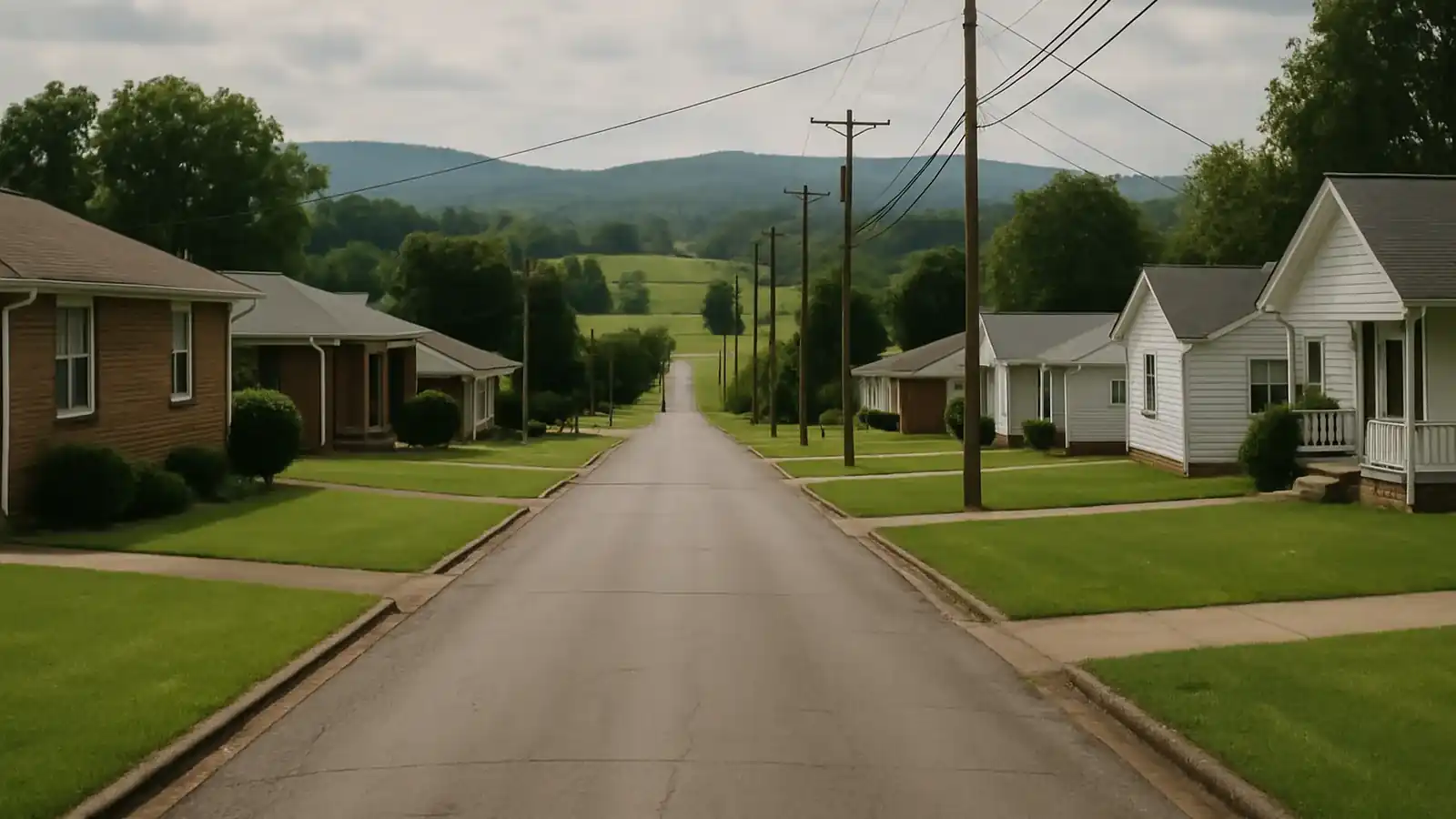
Crawl space encapsulation in Cookeville costs $6,000–$15,000 for the full sealed system. With roughly 60 inches of rain a year falling on Highland Rim karst limestone, Upper Cumberland crawls take water from springs, seeps, and humid-summer condensation at once.
Below: the signs your crawl is running the house, why cave-country ground makes its own rules, and what the sealed fix includes at each tier.
How a wet crawl space reports itself upstairs
Nobody visits their crawl. The house files the report instead:
- A musty smell that peaks every summer: crawl air rising through the floor system
- Hardwoods cupping over the dampest bays
- Floors going soft near bathrooms and outside walls: decay at work
- Indoor humidity the AC can't beat in July
- Allergies that improve the moment you leave home
- Camel crickets on the steps: cave country's own messenger
Two or more usually traces below. Many local specialists don't charge for the inspection; ask when they call. A good one includes photos, so the evidence shows up before any talk of money.
Cave country makes its own water rules
The Upper Cumberland sits on karst (limestone that dissolves) which is why Tennessee holds more mapped caves than any state in the country. Rain here doesn't politely run to the storm drain. It drops into the ground, travels channels no site plan shows, and resurfaces as springs and wet-weather seeps, sometimes in a yard, sometimes under a footing. Sixty inches of it a year keeps the whole underground network charged.
Meanwhile every vented crawl runs cave physics in miniature: humid summer air pouring through vents onto framing the AC has cooled, condensing exactly the way cave walls sweat. A cave is built for that. Your floor system isn't. The right sequence follows the ground's rules (find and manage the water first, then repair, then seal, then dry mechanically) and Tennessee's IRC-based code explicitly permits the sealed, unvented design.
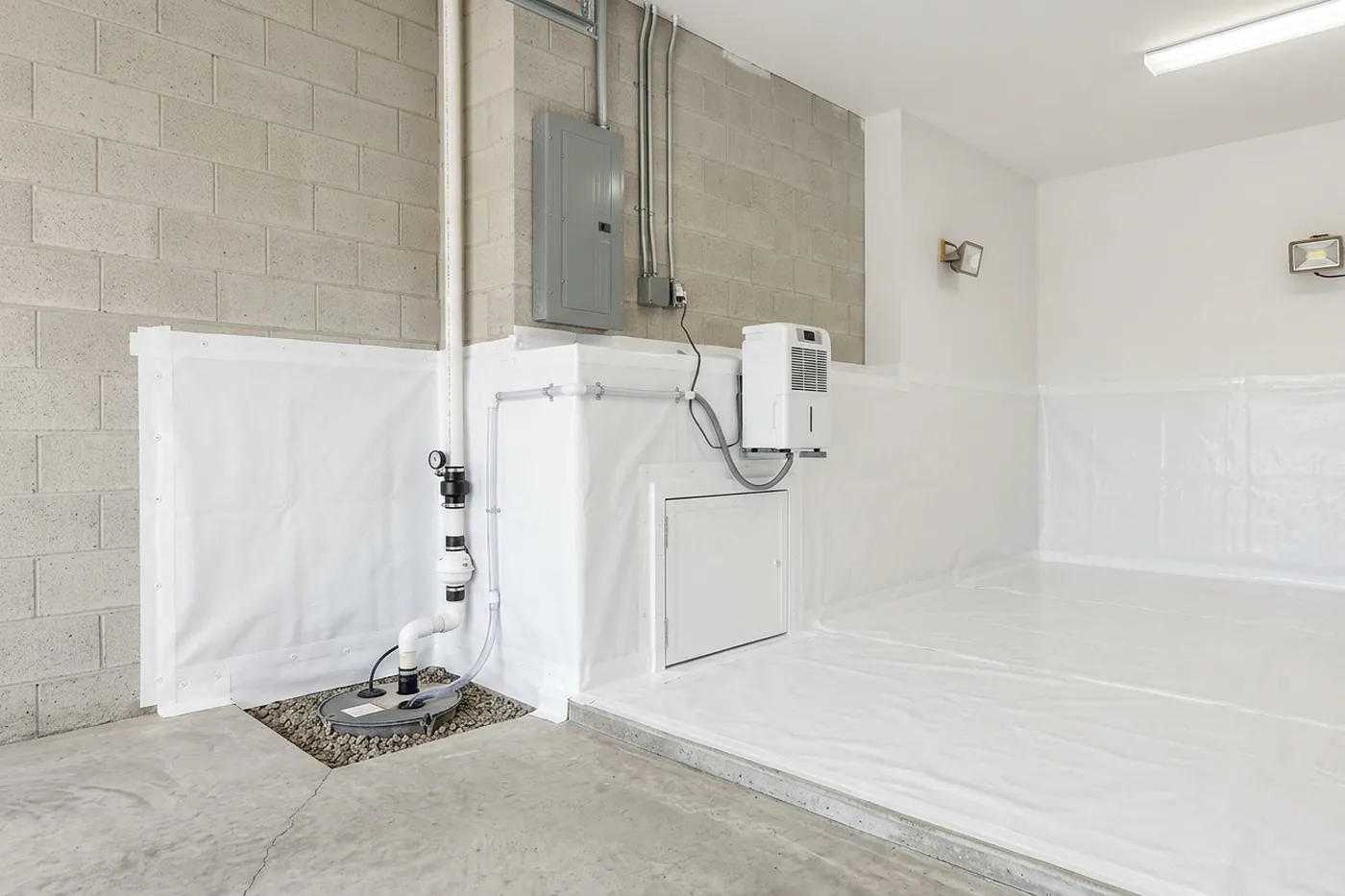
What the sealed system includes
- inspection: readings, framing, and the water path across the lot, not just under the house
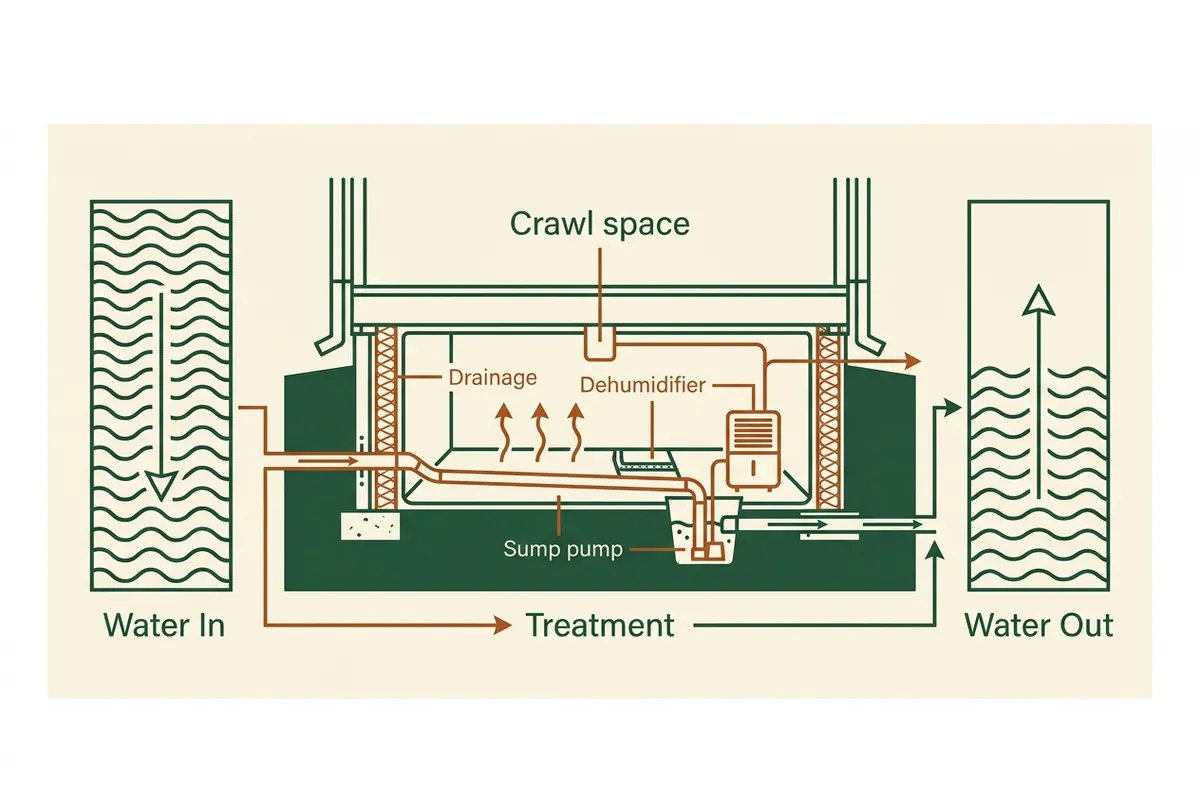
- Water management: spring and seep collection, sump and discharge, karst-aware routing
- Remediation: mold treated and damaged framing repaired before anything is sealed
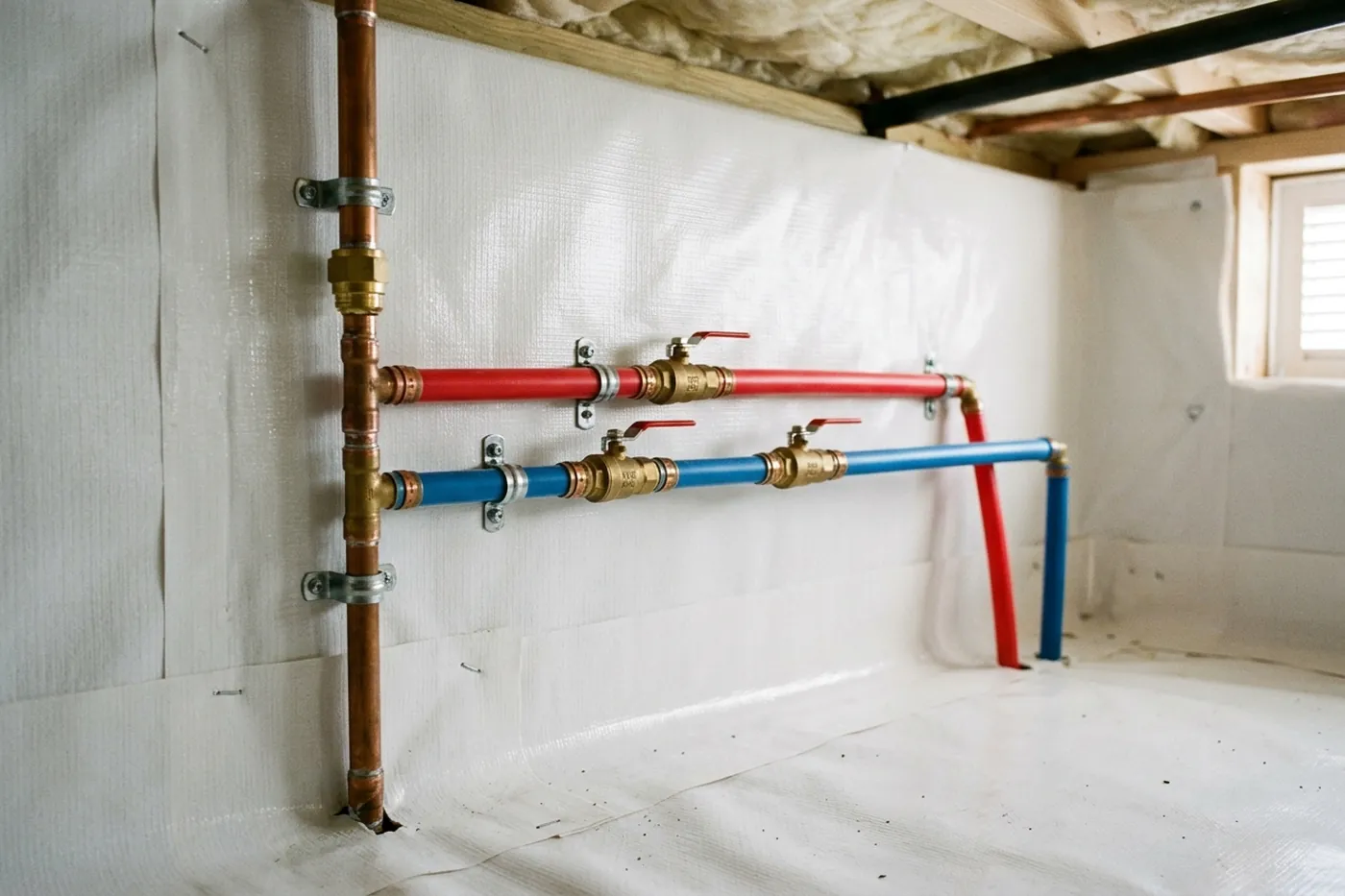
- The seal: reinforced 12–20 mil liner across ground and walls, taped seams, wrapped piers, closed vents
- The dry: crawl-rated dehumidifier sized to the space, on a drain
- Proof: commissioning readings and the finished photo set
What does each scope cost in the Upper Cumberland?
| Scope | Right for | Typical cost |
|---|---|---|
| Vapor barrier only | Dry crawls breathing ground moisture | $1,500–$4,000 |
| Moisture control package | Condensation without liquid water | $3,000–$7,000 |
| Full encapsulation | Damp crawl, musty house, mold pressure | $6,000–$15,000 |
| Encapsulation + water management | Springs, seeps, storm entry | $8,000–$15,000+ |
| Structural repairs | Softened sills, sagging floors | Quoted per repair |
The inspection places your crawl honestly: a WestSide bungalow and a Fairfield Glade retiree build rarely need the same thing.
Water under the house right now?
Plateau-edge storms arrive hard, and karst can push water up after the rain stops. Stay clear if electrical service runs through the crawl: kill those circuits at the panel if safe, then call (931) 369-2977. If water is standing right now, call (931) 369-2977; pump-out is usually stage one of the fix.
Our services
Everything under the floor, from a ground barrier to the full sealed system:
Crawl Space EncapsulationCrawl Space RepairCrawl Space WaterproofingVapor Barrier InstallationMold & Moisture ControlSump Pump & Drainage
Areas covered
The Upper Cumberland: college town to plateau top to lake country:
Crawl space encapsulation in CookevilleCrawl space encapsulation in AlgoodCrawl space encapsulation in BaxterCrawl space encapsulation in SpartaCrawl space encapsulation in MontereyCrawl space encapsulation in LivingstonCrawl space encapsulation in CrossvilleCrawl space encapsulation in SmithvilleCrawl space encapsulation in Gainesboro
One job gets its own deep page: what sixty inches of rain does to floor framing, and how joists, girders, and supports get fixed for this rainfall.
Frequently asked questions
How much does crawl space encapsulation cost in Cookeville?
Full encapsulation runs $6,000 to $15,000 across the Upper Cumberland, set by crawl size, how much water the karst delivers, and repairs found at inspection. Vapor barriers alone run $1,500-$4,000. Every number should follow an inspection. Our Crawl space encapsulation cost breakdown for Cookeville shows what drives each figure, line by line.
Why are Cookeville crawl spaces so wet?
Sixty inches of rain a year landing on karst limestone. Water here doesn't just run off; it disappears into the ground and resurfaces through springs and wet-weather seeps, sometimes directly under houses. Add humid-summer condensation in vented crawls and the moisture never really stops.
What does karst mean for my foundation?
Karst is limestone that dissolves. The reason Tennessee has more mapped caves than any other state. For homeowners it means groundwater moves in channels a site plan can't predict: springs appear, wet-weather streams come and go, and drainage design has to follow where the water actually shows up, which is what a good lot-walk maps.
Is my crawl space basically a cave?
Closer than you'd like. Caves stay damp because humid air meets cool rock and condenses. A vented crawl in a Cookeville summer runs the same physics against your AC-cooled framing. The difference is a cave is supposed to be damp. Sealing and drying the crawl breaks the cave cycle.
Is a sealed crawl space allowed under Tennessee code?
Yes. Tennessee's residential code, built on the IRC (R408.3 basis), permits unvented, sealed crawl spaces with a Class I vapor barrier and a drying mechanism such as a dehumidifier. Sealed-and-dried is the code-recognized design, not a workaround.
Does this suit rental houses near Tennessee Tech?
Often. Cookeville's rental stock works hard, and a sealed crawl is the configuration that survives tenant turnover: no vents to manage, humidity handled by hardware, and readings a landlord can verify from anywhere. Musty-smell complaints are lease-renewal killers; the seal ends them.
How long does the work take?
Barriers a day; drainage one to two; full encapsulation two to four. Karst lots with serious spring or seep management can run longer, so ask for the timeline in the written quote before work starts.
Will encapsulation help with the musty smell upstairs?
If the smell tracks summer humidity, yes: much of your first-floor air rises out of the crawl. Seal and dry the source and the smell goes within days. Ask for before-and-after humidity readings rather than taking it on faith.
Get a Cookeville crawl space inspection
Tell us what you're noticing (smells, humidity, floor bounce, a wet crawl) and we'll pass your request to one independent local specialist who serves Cookeville. They call you back to set up an inspection.