
Vapor barrier installation in Cookeville costs $1,500–$4,000 for a reinforced 12–20 mil liner sealed at seams and piers. At around 60 inches of rain a year on karst limestone, this is very wet ground.
Why cave country puts water under houses rather than just vapour, what a sealed install includes, and when the liner alone is honestly not enough.
On karst, the water does not only evaporate
Most crawl space advice assumes the ground gives up moisture as vapour. On the Eastern Highland Rim that is only half of it. Cookeville sits on limestone that rainwater has been dissolving for a very long time, and the result is a landscape of solution channels, springs and sinkholes: Tennessee has more mapped caves than any other state, and the plumbing under this plateau edge is a working part of that system.
What it means under a house is that water can arrive as water. After a heavy plateau-edge storm, a crawl that was merely damp can take a run of it through a low corner, from a direction that has nothing to do with the roofline or the gutters. Roughly sixty inches of precipitation a year keeps that system charged. So the first question here is not how thick the liner is, but whether the crawl is dealing with vapour or with flow.
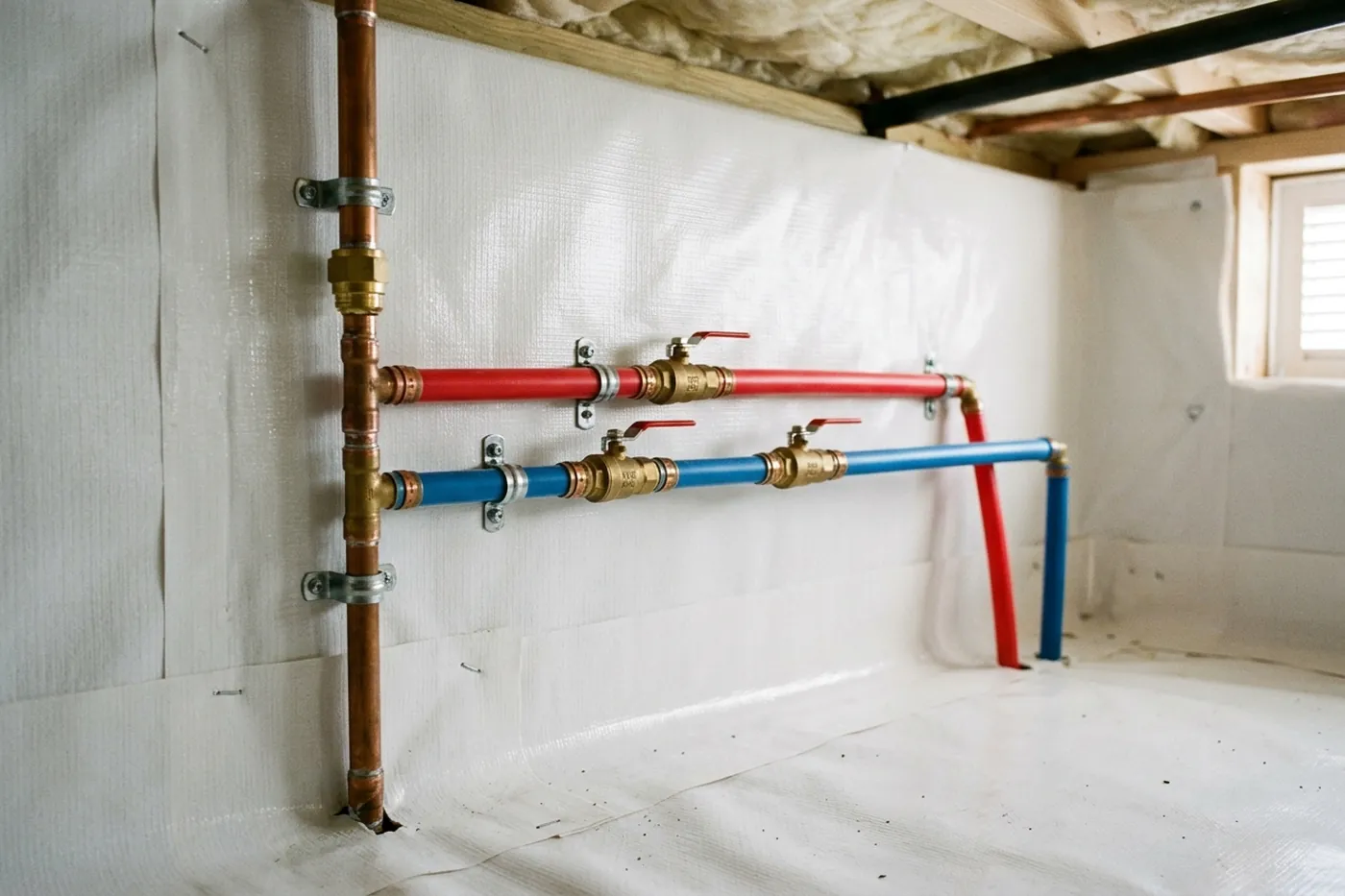
A liner that sheds, not just blocks
A barrier laid flat blocks vapour perfectly well and does nothing useful when water is moving. Over karst the detailing has to assume both, which mostly means deciding where water goes before it arrives rather than after.
- Reinforced 12–20 mil liner: survives decades of service traffic
- Laid to fall: graded toward the low corner and a drain, not left flat
- Ground prepped: debris and sharp rock cleared before a panel lays
- Seams overlapped and taped full length: a seal, not a loose lay
- Fastened at walls and every pier so nothing migrates when water runs
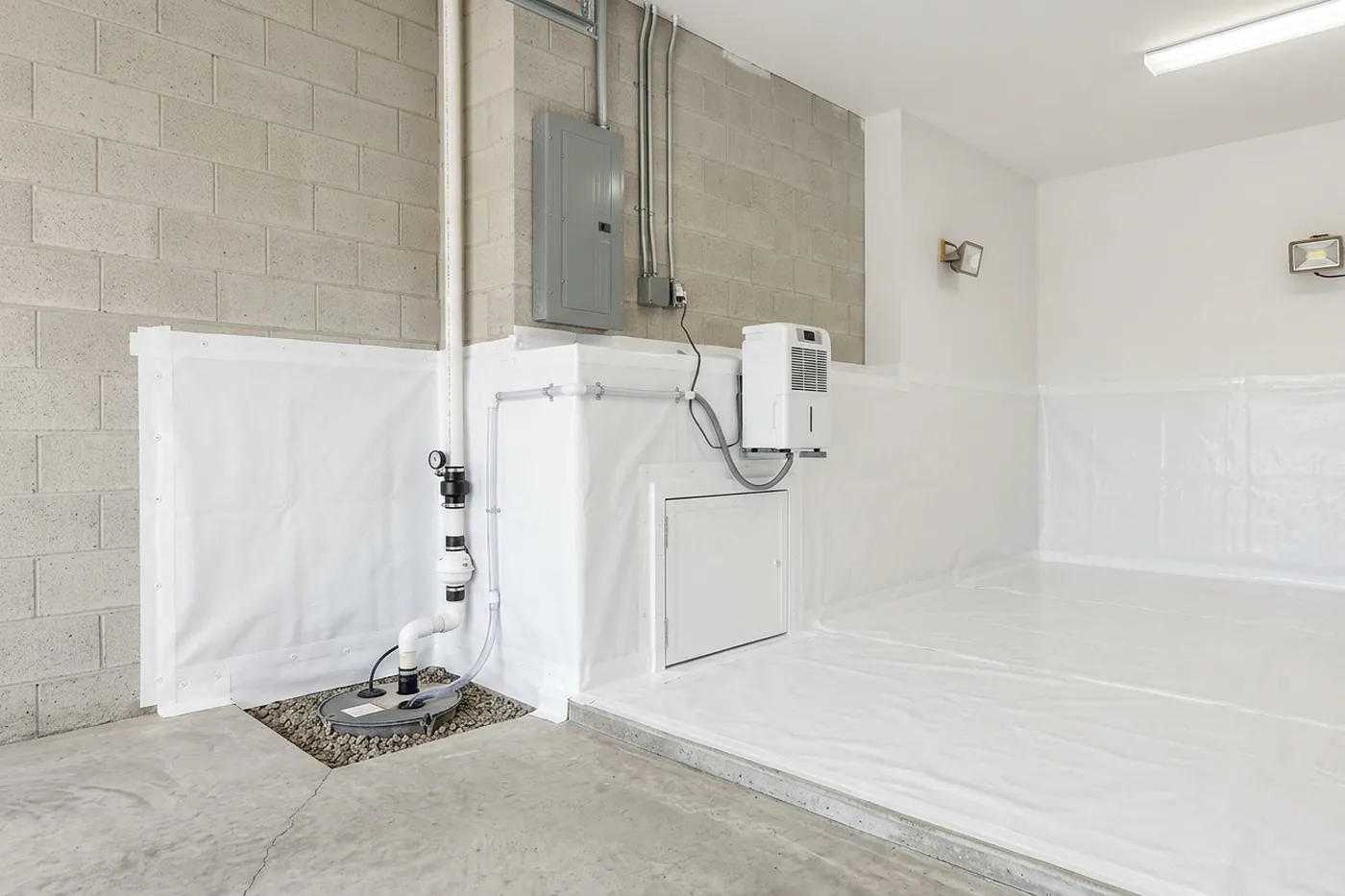
Installation day
- Ground prep: debris, failed sheeting and sharp rock cleared, surface graded
- Fall established: the low point identified and the liner laid to it
- Layout: panels cut oversized so every seam overlaps generously
- Sealing: seams taped, piers wrapped, penetrations closed
- Photos: the finished layer documented before the crew leaves
One crew, one day for most crawls in town. Properties out toward the escarpment take longer, partly for access and partly because the low point is rarely where you would guess. The quote should say which case yours is before the work starts.
What changes upstairs
Sealing the ground drops the humidity supply feeding your floor system, and in a market this wet the difference in subfloor readings tends to show up quickly. Long muggy summers here condense in vented crawls, and cutting the ground supply is the half of that problem you can solve cheaply.
The other half is the outside air itself, which is the sealed system's job. And if the inspection finds flow rather than vapour, a liner on its own is the wrong purchase. That is a drainage conversation, and it is better had before you have paid for the wrong thing.
When the liner alone is the wrong answer
Plenty of crawls here need exactly this and nothing more: newer construction around Algood and Baxter, decent clearance, no history of water. The readings say so, and a good specialist will say so with them.
But this is the market where stopping here is most often the wrong call. A crawl with a seasonal spring under it, a sinkhole in the yard, or a stain line that says water has stood before, needs the water routed before it needs it covered. The rental stock near Tennessee Tech and the lake properties out at Crossville and Smithville throw up both cases, and the readings tell them apart.
Which barrier does this crawl space need?
With this much water in the ground and this much humidity above it, a barrier here is asked to do more than usual.
| Option | What it does | What this market demands of it |
|---|---|---|
| Light poly, ground only | Basic evaporation control, loosely laid | Inadequate against the moisture load the Upper Cumberland produces |
| Class I barrier, sealed | Seams and edges sealed to the walls and piers | The code-recognised minimum, and the practical starting point here |
| Full encapsulation | Barrier up the walls, sealed, with humidity control | What sixty-inch ground actually needs |
| Barrier over wet ground | A liner laid on ground that still takes water | In karst, sealing over active groundwater moves the problem rather than ending it |
The order is not negotiable in this market: find the water, route it away, then seal. Reversed, the liner becomes a container.
Frequently asked questions
What does a vapor barrier cost installed in Cookeville?
$1,500–$4,000 for a reinforced 12–20 mil liner sealed at seams and piers across most crawls in town. It is also stage one of full encapsulation, so nothing is wasted if the crawl is upgraded later.
Does living on karst change what I need?
Often, yes. Limestone country moves water through solution channels, so a crawl here can take actual flow rather than just ground vapour. A liner handles vapour. Flow needs somewhere to go first, which is a drainage question.
My crawl is only wet after big storms. Is that still a problem?
It is the pattern worth investigating rather than dismissing. Intermittent water still wets framing, and on this plateau the storms that cause it are routine. The inspection looks for stain lines, which record what has happened when nobody was watching.
Is the old plastic under my house doing anything?
Loose 6-mil sheeting blocks a fraction of the vapour and fails wherever it gaps, tears or stops short of a pier. It also does nothing at all about water that moves, which here is the more important question.
Get a Cookeville crawl space inspection
Tell us what you're noticing (smells, humidity, floor bounce, a wet crawl) and we'll pass your request to one independent local specialist who serves Cookeville. They call you back to set up an inspection.