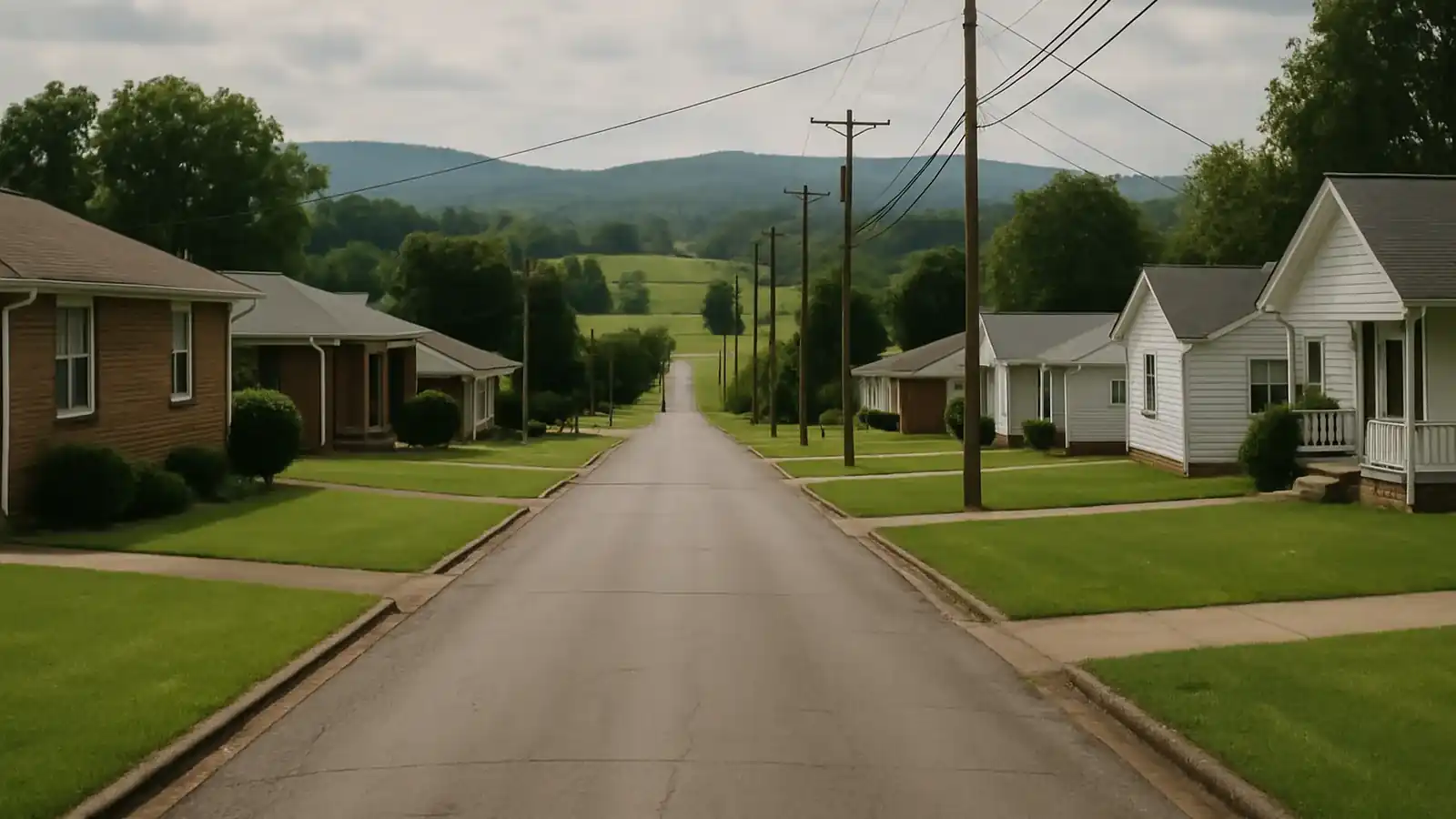
Crawl space mold remediation in Cookeville runs $1,500–$6,000, plus the moisture correction that keeps it gone. At roughly 60 inches of rain a year over karst, the water feeding it is often groundwater rather than humidity.
Why growth returns here, the remediation sequence, and the properties where treatment on its own is guaranteed to fail.
Find the water before you price the treatment
Surface bloom after a wet season is common and treatable. Growth with softened wood underneath means years of decay and a repair conversation instead. Both are routine findings. What is not routine is how often, in this market, the water feeding the growth turns out not to be humidity at all.
On the Highland Rim, rainwater moves through limestone that has been dissolving for millennia, and it surfaces where the rock decides. A crawl can sit above a seasonal spring with no fault in the guttering, no grading error, nothing wrong with the house at all. Treating framing in that crawl without addressing the water is the clearest example there is of buying the same job twice.
The sequence
- Find the source: vapour, seasonal flow or a plumbing fault, established first
- Document: photos and meter readings of every affected bay, shared before pricing
- Clear: contaminated insulation and debris out
- Treat: antimicrobial application across affected framing
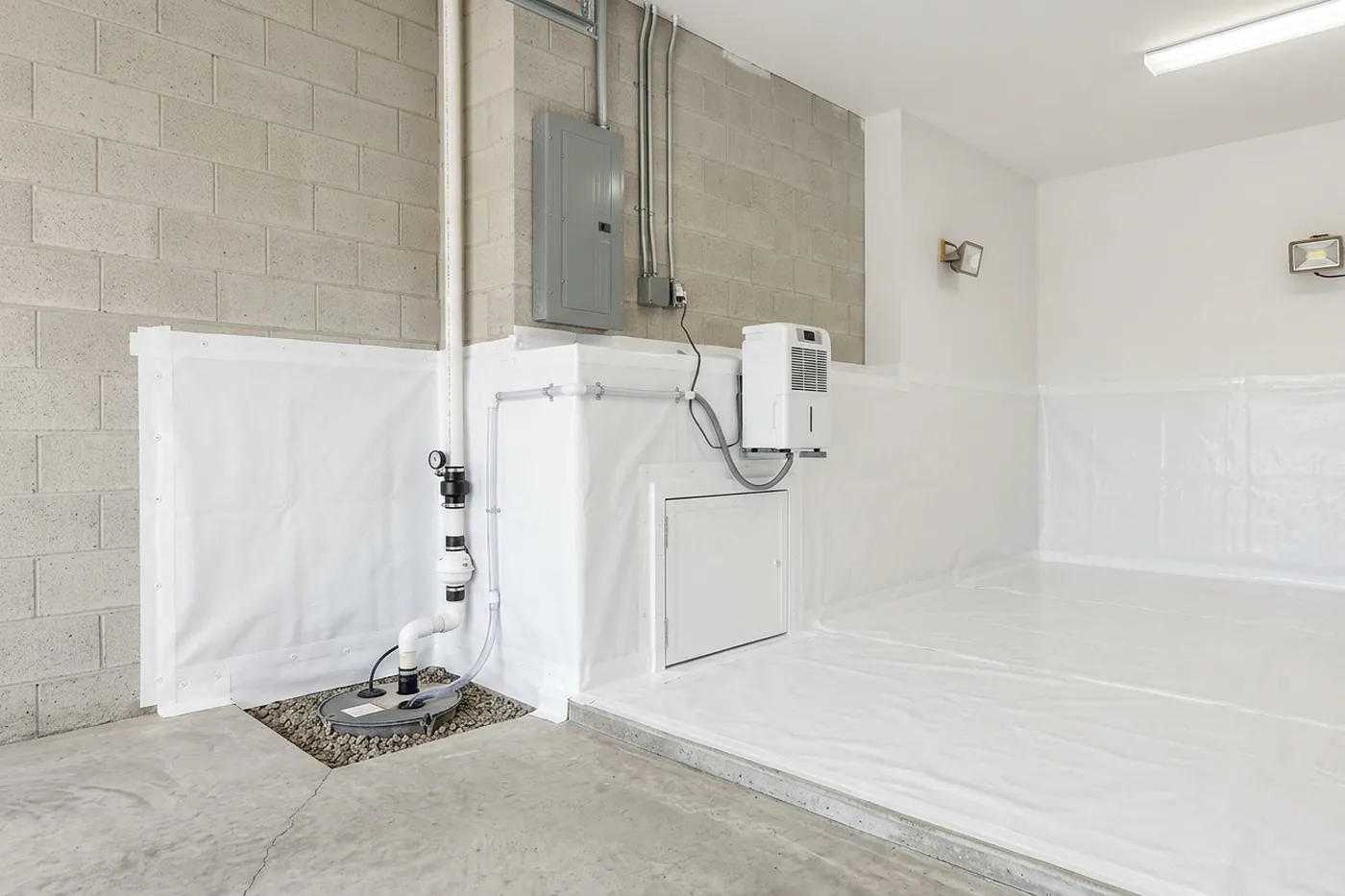
- Correct the moisture: drainage first where there is flow, barrier or sealed system where there is not
- Verify: post-work photos and humidity targets in writing
The order matters here. On most ground the moisture fix follows the treatment; over karst, if there is running water, it comes first or the treatment is wasted.
The properties where treatment alone always fails
Three patterns account for most of the repeat work in the Upper Cumberland, and all three are recognisable before anyone spends anything.
Crawls above seasonal springs, where the water arrives on its own schedule and no amount of antimicrobial changes that. Rental stock around Tennessee Tech, where the crawl is nobody's daily problem and growth is usually well established by the time it is reported. And the lake and retirement properties out toward Crossville and Smithville, shut up unconditioned for months at a stretch. No air conditioning running means no incidental dehumidification, and a closed house in a sixty-inch-rain climate makes its own weather underneath.
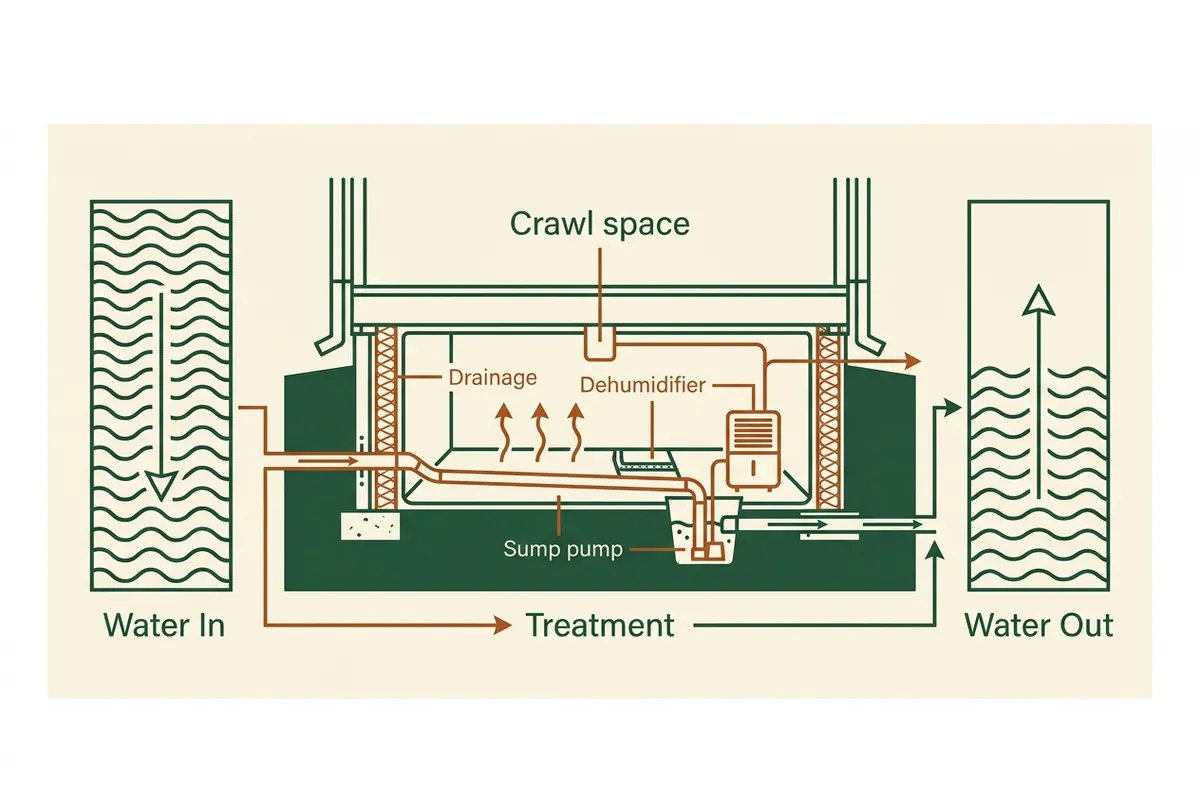
The durable purchase pairs treatment with the right moisture fix: water management where there is flow, a sealed ground barrier or the full sealed system where there is not.
How do you actually get the humidity down?
Long muggy summers and roughly sixty inches of rain a year make vented crawl spaces fail predictably here. The smell usually arrives before anything visible does.
| Option | What it does | What works here |
|---|---|---|
| Close the vents | Stops humid outdoor air being invited in | Tennessee's code basis permits unvented sealed crawls with a drying mechanism |
| Seal the ground | Cuts off evaporation from bare soil | Bare ground in a 60-inch rainfall market evaporates without pause |
| Dehumidify | Removes what is left, and keeps removing it | Not optional here: the moisture load is the largest we deal with |
| Condition from the house | Supplies a small amount of conditioned air instead | Workable where the system has capacity, though the load is high |
This is the market where closing the vents makes the most difference, because it is the market where opening them costs the most.
Frequently asked questions
What does crawl mold remediation cost in Cookeville?
$1,500–$6,000 depending on affected area, plus the moisture correction that keeps it gone. Where the source is groundwater rather than humidity, the drainage work is the part that determines whether it stays gone.
Why does it keep coming back after treatment?
Almost always because the water source was never addressed. Over karst that source is frequently a seasonal spring or a solution channel rather than ground vapour, and neither responds to anything sprayed on the framing above it.
The house sits empty for months. Does that matter?
It matters a great deal. A closed, unconditioned house has no air conditioning quietly removing humidity, so a crawl in this climate can run at high moisture unchecked for a whole season. It is a common pattern in lake and retirement stock.
Is lab testing needed, or just treatment?
A good job documents visible growth with photos and meter readings, treats the affected framing, and corrects the moisture. Third-party lab identification is worth asking about when a household needs it, and should be offered when genuinely useful rather than sold as theatre.
Get a Cookeville crawl space inspection
Tell us what you're noticing (smells, humidity, floor bounce, a wet crawl) and we'll pass your request to one independent local specialist who serves Cookeville. They call you back to set up an inspection.