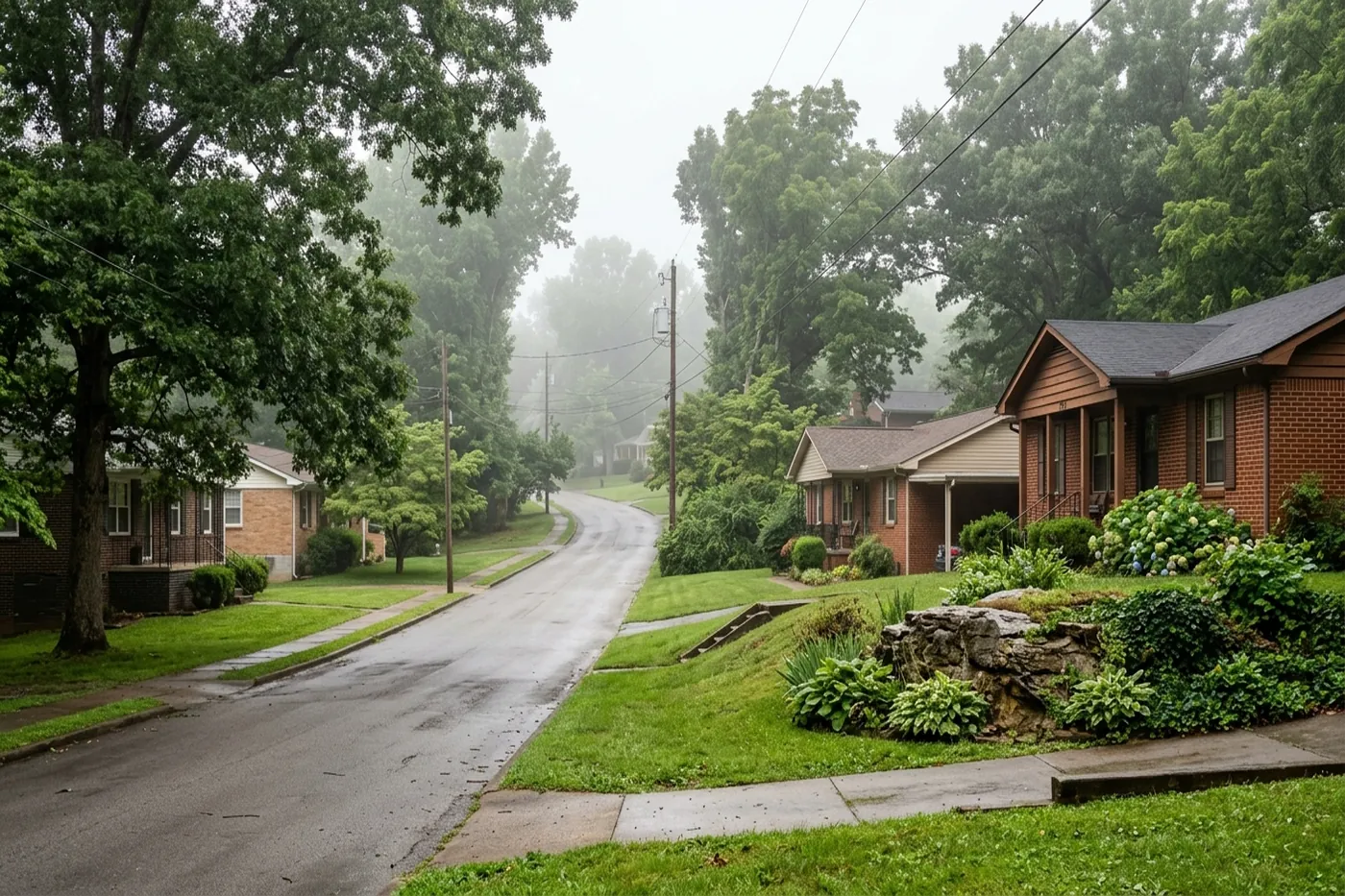
Sagging floor repair in Cookeville runs $1,500–$8,000 for most crawl space structural work: sistering weakened joists, replacing rot-claimed girder and sill sections, and resetting supports. At 60 inches of rain a year, replacement claims a larger share of scopes than drier towns ever see.
What sixty inches does to a floor system, the karst wrinkle, and the repair in order.
Sixty inches, applied annually
Wood carries load by staying stiff, and stiffness is a dry-wood property — which makes Cookeville’s 60 inches of annual precipitation a structural number. Upper Cumberland crawl spaces spend more of the year wet than any market we work: long muggy summers condense in vented crawls, plateau-edge storms recharge the ground, and framing that never gets a dry season loses stiffness quietly, then loses substance to rot. The floor above reports the progression in order — bounce first, slope second, soft spots third — and every stage costs more than the one before it.
The karst wrinkle: same rain, different lots
The Eastern Highland Rim’s limestone drains on its own logic. Lots over open joints shed storm water downward fast, and their crawl spaces recover between rains; lots where a clay cap seals the surface hold that same water for weeks, and their crawl spaces never quite dry. Two houses a mile apart on the same year’s rain can show a decade’s difference in wood condition — which is why the inspection reads your lot’s drainage personality before anyone prices a repair, and why discharge routing here follows the karst rule: dispersed, away from the house, never into a depression.
Reading the symptoms
| What you notice | What it usually means | The fix |
|---|---|---|
| Bounce in the middle of a room | Joists deflecting — wet-softened or under-sized | Sister or reinforce the run |
| Slope toward one area | A girder sagging or a support settled | Girder repair; supports reset on proper footings |
| Soft spots underfoot | Rot — the sixty-inch specialty | Replacement — rot doesn’t repair |
| Musty rooms above the crawl | The wet crawl breathing upward | Moisture work joins the scope |
| Gaps under baseboards | Floor field dropping | Span-by-span survey, targeted support |
The repair, in the order that holds
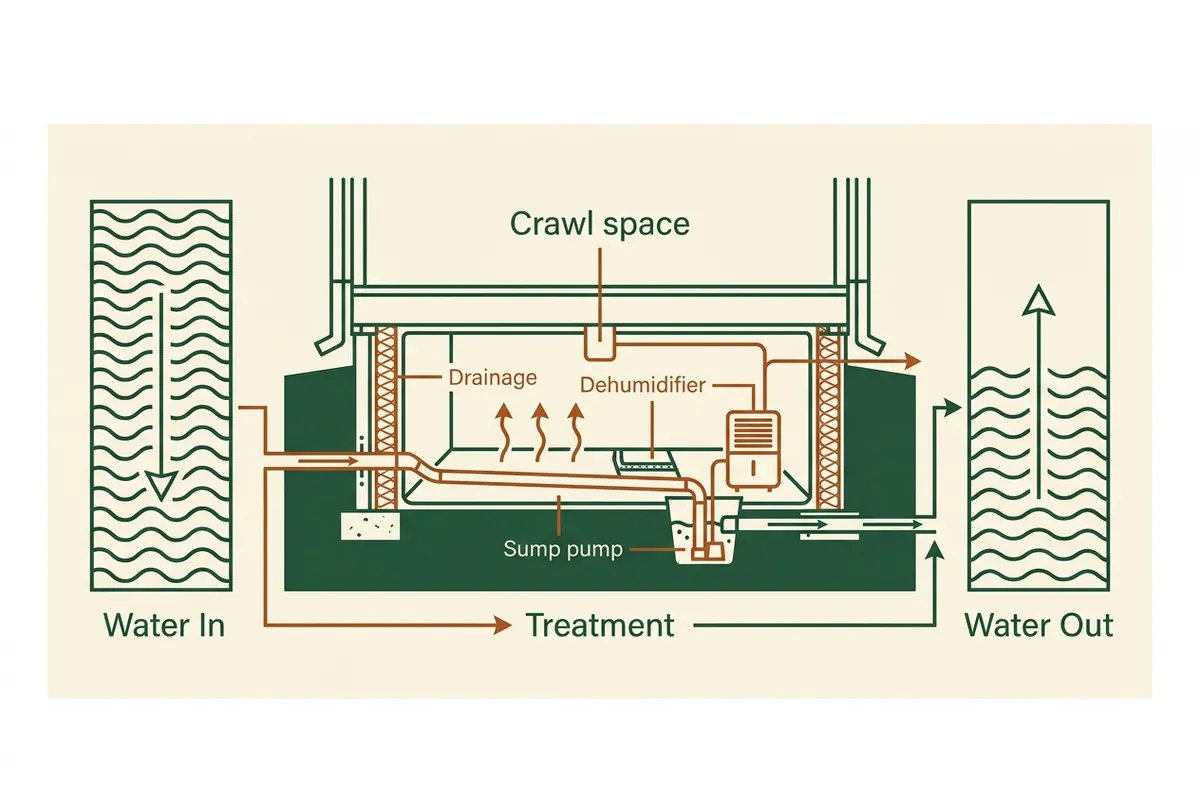
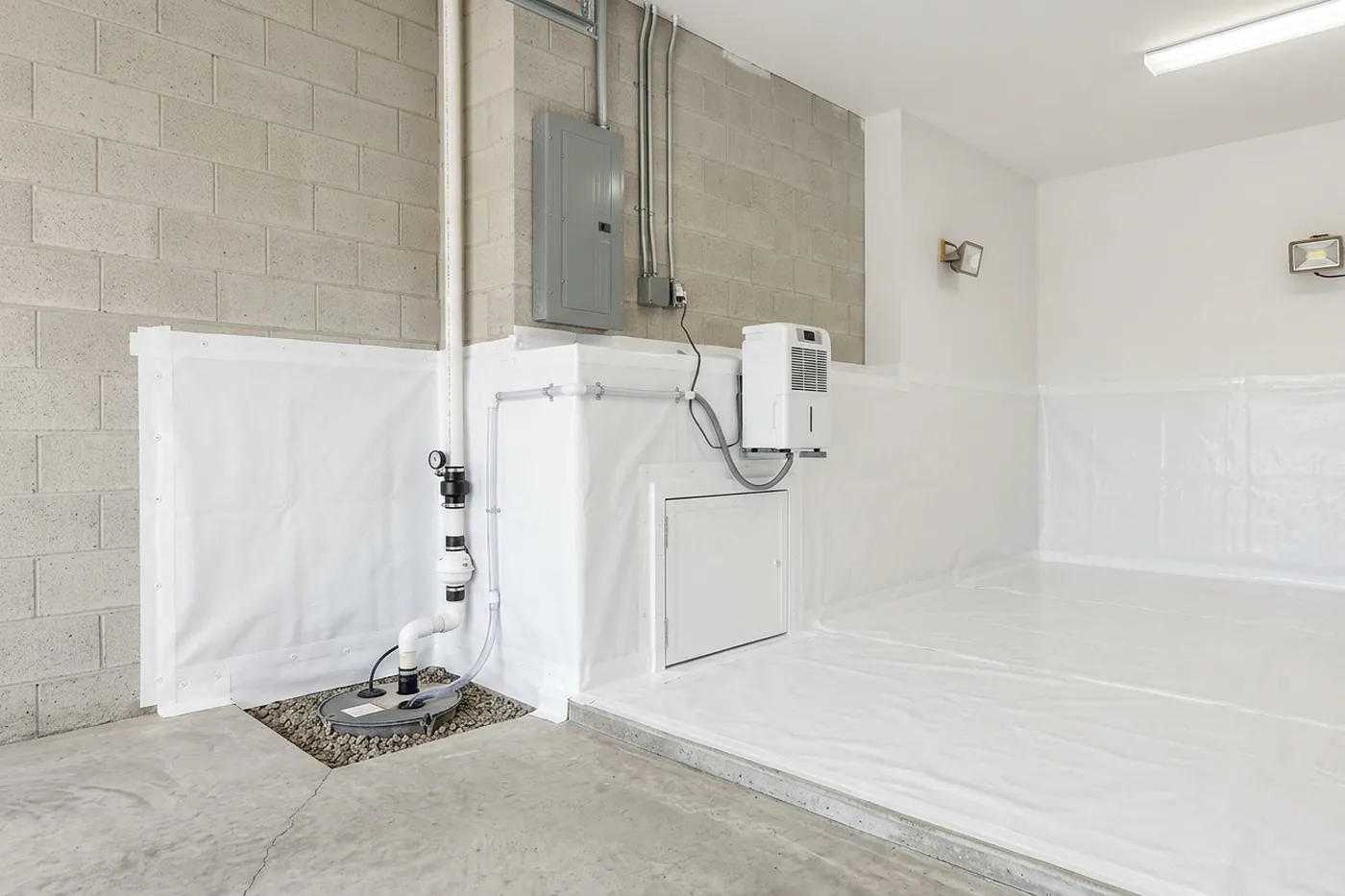
Measurement first: the laser survey upstairs maps which spans dropped; the crawl-under with a moisture meter says why and how far the rot has gone. Then the carpentry — and at this rainfall, honest scopes carry more replacement than reinforcement: girder and sill sections out where rot claimed them, joists sistered where wetness only weakened them, supports reset on proper footings. Then the water, sized for sixty inches rather than an average market: waterproofing and drainage with karst-aware discharge, a sealed vapor barrier, and moisture control against the muggy season, with full encapsulation as the endpoint the rainfall argues for. Broader context on the crawl space repair page; every price in the cost guide.
What to expect after the repair
A repaired floor comes back within tolerance rather than perfectly flat, and the lift is staged gradually so the finishes upstairs survive it — expect to adjust a door or two and to patch a hairline crack after a season. What matters more here is what happens next, because sixty inches of rain a year does not take a break for your new lumber. Keep the discharge routing intact and karst-aware, check the crawl after the first heavy storm of spring, and leave a hygrometer under the house. In the wettest market we work, the difference between a repair that lasts twenty years and one that lasts eight is entirely whether the water work stayed working.
Sagging floor questions, straight answers
Why do Cookeville floors over crawl spaces sag faster?
Volume. Sixty inches of precipitation a year — the wettest market we work — means Upper Cumberland crawl spaces spend more of the year wet than anywhere nearby, and wet wood loses stiffness before it visibly rots. Karst drainage adds the twist: water vanishes fast on some lots and perches on clay-capped others, so two houses a mile apart age differently.
Does the karst under the Highland Rim change the diagnosis?
It changes the water reading. Where the limestone's joints run open, crawl spaces dry quickly after storms; where a clay cap seals the ground, sixty inches a year has nowhere to go and the crawl stays wet for weeks. The inspection reads which lot yours is — the same rain writes gentle wear on one street and aggressive rot on the next.
Is a bouncy floor in a rental or lake house worth chasing?
Especially there. Tech-area rentals and lake homes see uneven occupancy and deferred looks-under — exactly how a wet-year sag compounds into structural replacement. Bounce is framing deflecting under load; a laser survey and a moisture meter turn it into numbers, and early numbers are the cheapest ones in this market's rainfall.
What does the repair actually involve?
Match the fix to the failure: sistering joists the wet years weakened, replacing girder and sill sections rot has claimed — at sixty inches a year, replacement shows up in scopes here more than anywhere — resetting supports, and then the water work that made it all necessary, sized for this rainfall rather than an average market's.
What does sagging floor repair cost in Cookeville?
Most structural crawl space repairs run $1,500-$8,000 — driven by how much is replacement versus reinforcement, and at this rainfall the replacement share runs higher than drier markets see. The drainage and moisture work that stops recurrence prices in the same written scope. The crawl-under inspection with photos is free.
Get a free Cookeville crawl space inspection
Tell us what you're noticing — smells, humidity, floor bounce, a wet crawl — and we'll schedule an inspection with photos of what we find. We reply the same business day.